
What does an undergraduate politics degree look like? It depends on where you study
Published:
How should a political science department construct its undergraduate degree? This is a question that shapes the studies of hundreds of thousands of students around the world, yet almost everything we know about political science curriculum design comes from a single country. For over two-thirds of recent published research on political science curricula looks only at the United States. My new open-access article in the Australian Journal of Political Science asks what happens when we look beyond the US.
For this project, I collected the curriculum of every accredited politics, political science, and international relations degree in five English-speaking democracies: Australia, Canada, Ireland, New Zealand, and the United Kingdom. I ended up coding 218 programs at 140 universities. For each one I recorded whether it requires the three elements of the model John Wahlke and an APSA task force proposed back in 1991: introductory courses, research methods training, and a capstone experience like a research thesis. The idea behind this sequence is simple: students learn more by building their skills progressively rather than selecting courses for their degree purely at random.
Three findings stand out.
First, structured curricula are far more common outside the United States than the US-focused literature would suggest. Thirty-four percent of universities in my sample require all three Wahlke (1991) elements, compared with just 18 percent of US programs in the most comparable study. The often-repeated claim that the structured model has failed to catch on turns out to be a story about the US, not about the discipline more broadly.
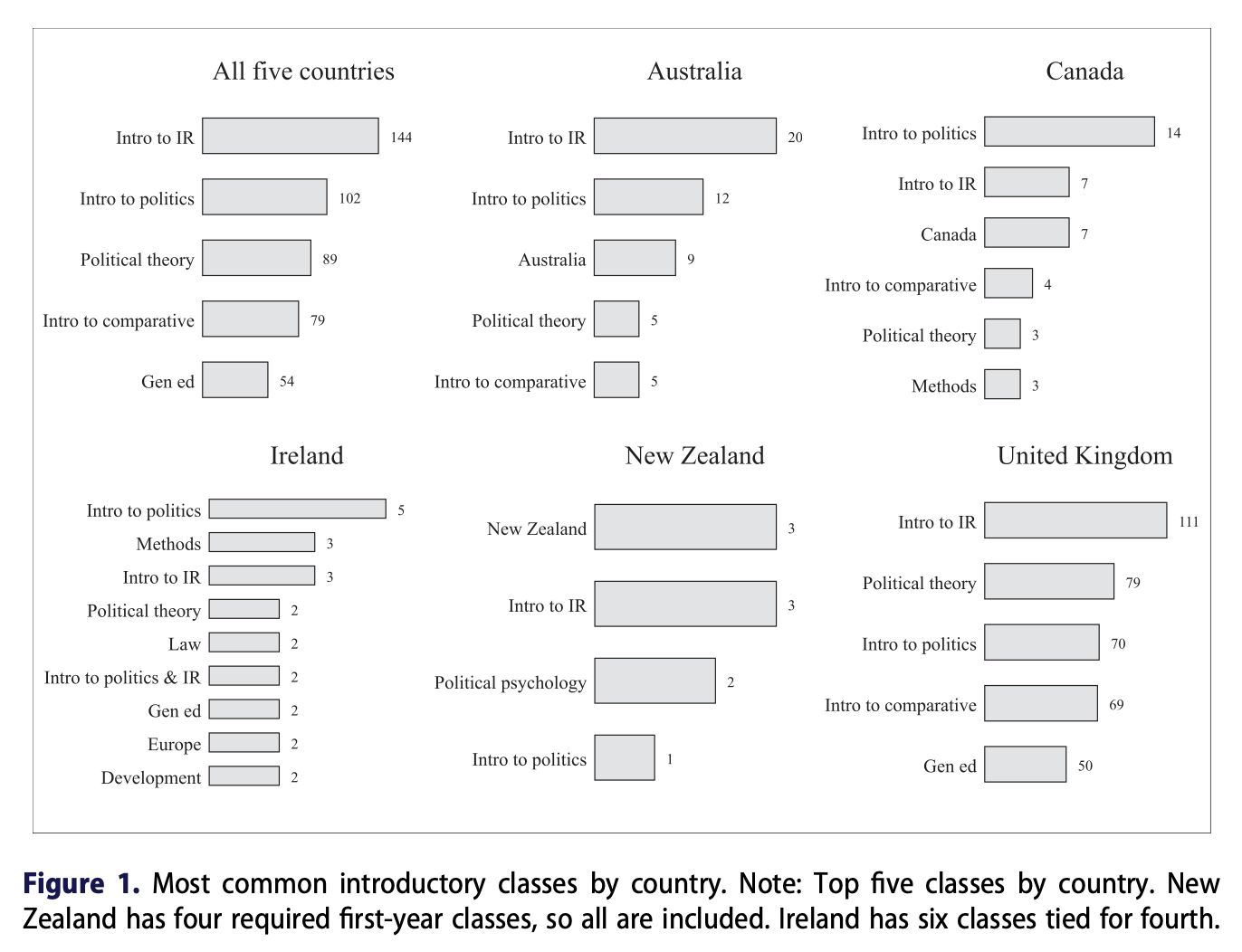
Second, that 34% average hides enormous variation between countries. The UK does almost all of the heavy lifting, with 76 of its 141 programs requiring the full sequence, a pattern that very likely reflects the national Subject Benchmark Statement for politics. Introduction to International Relations is the single most required course across the whole sample, appearing in 144 of 218 degrees. But each country has its own signature, with national-politics courses common in Australia, Canada, and New Zealand, yet largely absent in Ireland and the UK.
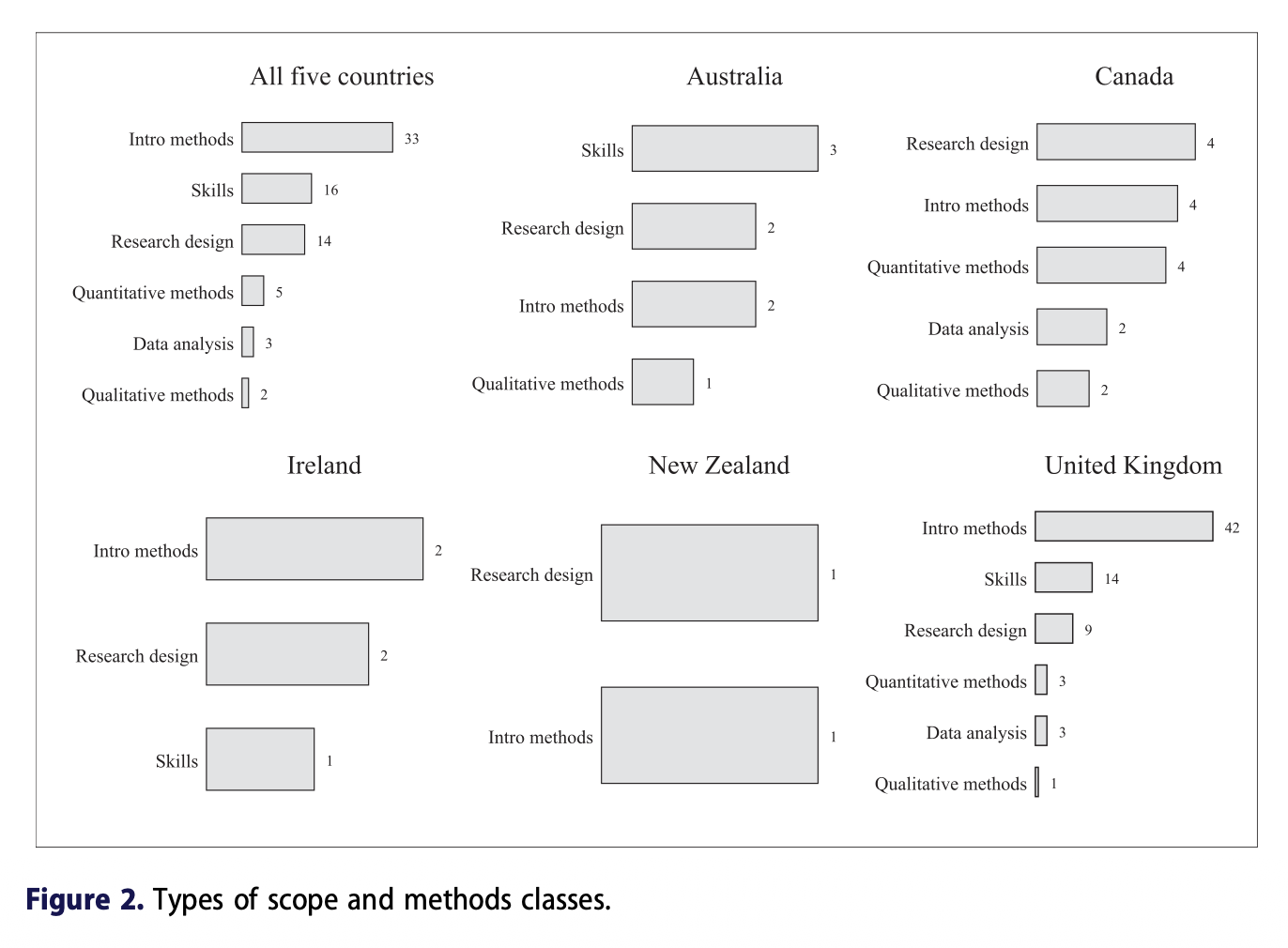
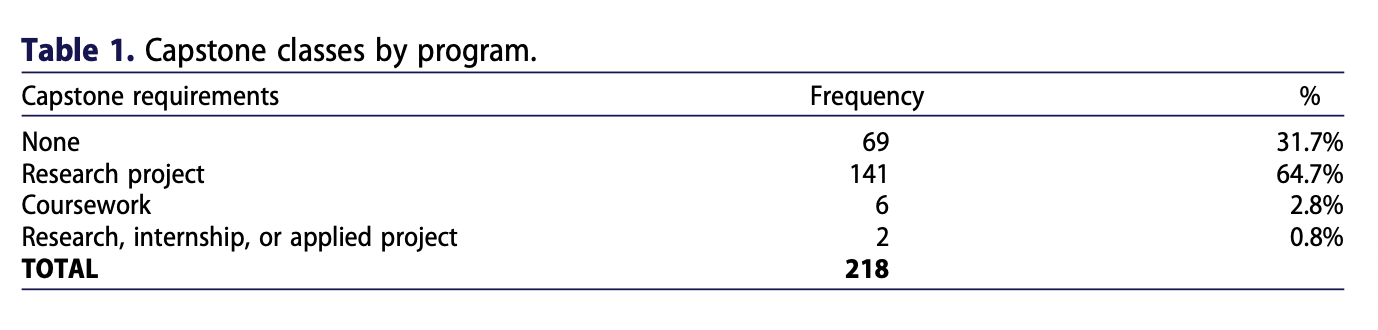
Third, structure is not random. Using multivariate regression models, I find that three institutional features consistently predict a more structured degree: PhD-granting status, a larger faculty, and a higher share of the degree made up of required courses. PhD-granting universities, for example, are nearly twice as likely to require methods training as those without doctoral programs. Prestige matters too, but mainly for capstones, where elite universities are more likely to have the staff to supervise independent research. Put simply, a department’s mission and resources shape its curriculum.
In sum, this paper suggests that curriculum design reflects systematic relationships between institutional characteristics and program structure. Understanding these patterns and the mechanisms that produce them can inform more intentional curricular choices that align program design with educational goals in different institutional contexts. For Australian political science in particular, these findings suggest that our relatively unstructured approach likely reflects institutional autonomy rather than pedagogical consensus– a distinction that matters as quality assurance debates intensify.
If you are curious to know more, the article is open access and available here.